
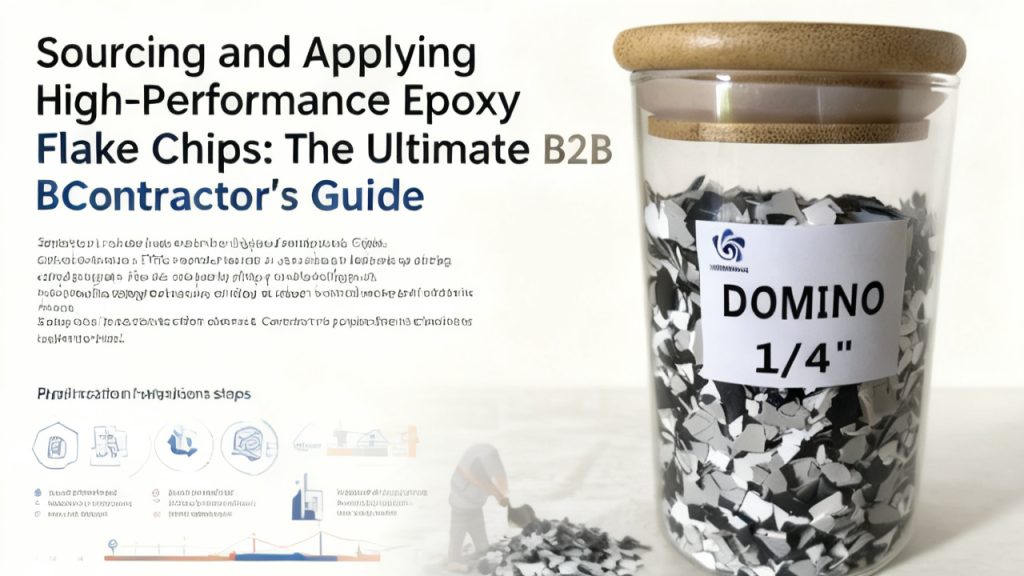
The resinous flooring industry has experienced unprecedented growth over the last decade, driven by the commercial, industrial, and residential sectors’ demand for high-durability, low-maintenance, and aesthetically versatile surfaces. At the center of this boom is the decorative flake system. Whether you are a commercial flooring contractor bidding on a 100,000-square-foot manufacturing plant, an architect specifying finishes for a modern educational facility, or a regional distributor stocking your shelves, understanding the science, application, and economics of decorative concrete flakes is vital to your bottom line.
This technical guide explores the material composition of color flakes for epoxy, analyzes the logistical advantages of bulk procurement, and outlines the precise installation protocols required to deliver flawless, industrial-grade surfaces that stand the test of time.
The Material Science Behind decorative concrete flakes
To the untrained eye, epoxy flake chips are merely aesthetic elements designed to mimic granite or terrazzo. To a chemical coatings professional, however, they are highly engineered vinyl and acrylic polymer compounds formulated to perform under extreme physical and chemical stress.
High-quality decorative concrete flakes are composed of a proprietary blend of vinyl and acrylic resins, organic and inorganic color pigments, and structural fillers. This unique formulation yields several critical performance characteristics:
- Flexibility and Resilience: Unlike rigid mineral aggregates, vinyl color chips possess a degree of elasticity. When embedded within a rigid epoxy or polyaspartic matrix, they absorb impact energy, reducing the risk of micro-cracking and delamination from dropped tools or heavy vehicular traffic.
- Colorfastness and UV Stability: Premium flakes utilize advanced UV-stable pigments. This prevents yellowing, chalking, and fading when exposed to sunlight through large commercial windows or in open-air parking structures.
- Uniform Thickness and Shape: Standard commercial flakes are precision-cut to specific size classifications—most commonly 1/4-inch and 1/16-inch. Consistent thickness (typically 4 to 5 mils) ensures an even distribution across the floor, preventing high spots that require excessive sanding or extra topcoat material to seal.
The Economics of Scale: Why Buying Epoxy Flakes Wholesale Matters
For professional contractors, profitability is determined by two factors: labor efficiency and material yield. While a standard retail garage floor flake kit might suffice for a homeowner’s weekend DIY project, commercial operations require a robust, scalable supply chain.
When you buy epoxy flakes in bulk, you unlock several structural advantages that directly impact your operational efficiency:
1. Cost-Per-Square-Foot Optimization
Purchasing materials in individual retail packaging introduces significant markup and packaging waste. Sourcing epoxy flakes wholesale allows contractors to secure volume-based pricing, reducing material costs by up to 40% compared to retail-tier purchasing. In large-scale commercial bids, this cost reduction can be the deciding factor between winning and losing a contract.
2. Batch Consistency and Quality Control
Color consistency is a major risk when executing large-scale projects over multiple phases. Minor variations in pigment blending during manufacturing can lead to visible seam lines between different application zones. By ordering custom-blended color chips for garage floor paint and resinous systems in single, large-volume batches, contractors ensure absolute aesthetic uniformity across the entire footprint of the project.
3. Custom Branding and Signature Blends
Commercial clients often require specific color palettes to align with corporate branding, school colors, or safety zoning regulations. Establishing a direct relationship with a wholesale manufacturer allows contractors to design custom color blends, offering a high-margin, bespoke service that distinguishes them from competitors who rely on pre-packaged retail options.
Technical Installation Protocols: Achieving a Flawless Full-Broadcast Finish
The durability of a decorative flake floor relies heavily on execution. While partial broadcast systems exist, commercial specifications almost universally demand a “full broadcast to rejection” system. This method ensures that the underlying concrete is completely shielded, creating a slip-resistant, multi-layered composite surface.
Phase 1: Substrate Preparation
No resinous system can outperform its substrate. The concrete must be mechanically profiled using diamond grinding or shot blasting to achieve an International Concrete Repair Institute (ICRI) Concrete Surface Profile (CSP) of 2 to 3. All cracks, spalls, and joints must be repaired using a high-solids epoxy joint filler before coating application. Moisture vapor emission rates (MVER) must be tested; if levels exceed 3 lbs per 1,000 sq. ft. over 24 hours, a specialized moisture mitigation primer must be applied.
Phase 2: Basecoat Application
A high-solids, 100% solids epoxy basecoat is applied using a squeegee and back-rolled to a uniform thickness, typically between 8 to 12 mils. The color of the basecoat should complement the primary color of the epoxy flake chips to ensure that any minor thin spots in the broadcast remain visually imperceptible.
Phase 3: The Broadcast to Rejection
While the basecoat is still wet, the decorative concrete flakes are cast into the air, allowing them to rain down vertically onto the wet resin. This vertical descent ensures flat placement and prevents the flakes from clumping or sliding.
The flakes must be thrown in excess—typically calculated at a rate of 0.12 to 0.15 pounds per square foot. The broadcast continues until the floor is completely dry to the eye, indicating that the basecoat cannot absorb any more flakes. This is known as broadcasting to “rejection.”
Phase 4: Recovery, Scraping, and Grooming
Once the basecoat has fully cured (typically 8 to 12 hours depending on ambient temperature and formulation), the excess, unadhered color flakes are swept and vacuumed. Because these reclaimed flakes have not come into contact with wet resin, they can be filtered, repackaged, and utilized on future projects—a key sustainability and cost-saving practice for high-volume contractors.
The floor is then scraped using a flat steel floor scraper in multiple directions. This process shears off any vertically oriented or loose flakes, creating a smooth, uniform surface profile. After a final vacuuming, the floor is ready for the protective topcoat.
Phase 5: High-Performance Topcoat Application
The final step is the application of a clear, wear-resistant topcoat. For demanding commercial and industrial environments, an aliphatic polyaspartic or polyurethane topcoat is highly recommended over standard epoxies. These advanced polymers offer superior scratch resistance, chemical resistance to automotive fluids and harsh cleaning agents, and absolute UV stability to prevent ambering over time.
The Strategic Partner for Commercial Coating Success
In the competitive landscape of industrial and commercial contracting, your choice of materials and suppliers defines your reputation. Utilizing sub-par materials or relying on limited retail supply chains introduces unnecessary risk, increases material costs, and limits your operational capacity.
By partnering with a dedicated wholesale supplier of high-performance epoxy flake chips, you gain access to the volume, consistency, and technical support required to execute large-scale projects with absolute confidence. Elevate your coating systems, optimize your material margins, and deliver surfaces that combine industrial-grade durability with striking architectural beauty.